Falling Film Evaporators

Working Principle

The liquor is fed to the top of the heat exchanger. From there, the liquor is distributed into the tubes with Dedert full cone spray nozzles or perforated distribution baskets. The liquor forms a film on the inside of the tube walls and travels down the length of tubes. The energy source on the shellside drives the evaporation on the tubeside whilst the vapor is released from the liquor. At the bottom of the tubes, the concentrated liquor exits heat exchanger, and the vapor continues into an empty separator where any droplets are removed from the vapor via centrifugal action or a demister.
The droplets are then combined with the concentrated liquor. The clean vapor continues to a subsequent effect, a thermocompressor, a compressor or a fan. Learn more about evaporators.

Industries

Dedert Falling Film (FF) Evaporators are hard at work in the following industries:
  • Food Processing
  • Chemical Manufacturing
  • Distillery Operations
  • Biofuel Productions

Experience

1,500+

evaporators and crystallizers worldwide

55+

industry experience since 1968

Innovating Flexible Solutions for Over 55 Years!

0
Countries
0+
Installations
0+
Satisfied Customers
0+
Years of Experience
0
Global Offices

Applications

Dedert Falling Film (FF) Evaporators are used for most evaporator applications due to having the lowest Total Cost of Ownership when compared with forced circulation and rising film.

Falling film evaporators are used for a variety of applications, including:

  • Amino acids
  • Ammonium sulfate
  • Barley stillage
  • Beet stillage
  • Betaine caustic stillages
  • Calcium carbonate
  • Cane stillage
  • Citric acid and salts
  • Corn steep liquor
  • Corn stillage
  • Corn syrup
  • Dextrose
  • Erythritol
  • Fructose
  • Glucose
  • Gulonic acid
  • Glycerin
  • Itaconic acid
  • Lactic acid
  • Lysine
  • Maltodextrin
  • Maltose
  • Molasses
  • MSG
  • Potato juice
  • Pea solubles
  • Potassium carbonate
  • Rendering waste
  • Sodium chloride
  • Sodium sulfate
  • Sodium thiocyanate
  • Steepwater
  • Succinic acid
  • Sucrose
  • Sugar betane
  • Sugar raffinate
  • Sugar vinasse
  • Theonine
  • Tomato sauce
  • Vitamin C
  • Wheat “C” starch effluent
  • Wheat stillage
  • Yeast

Key Details About 

Dedert’s Air Bearing Atomizer

The atomizer's simple and sanitary design features FDA-compliant stainless-steel construction and a lightweight Titanium disc. It has only one moving part, which eliminates premature wear-and-tear and reduces the need for spare parts and maintenance such as bearing changes. The rotatable maintenance stand makes servicing and cleaning easy, further reducing maintenance requirements.

The air bearing atomizer comes with an integrated control module that includes an HMI, PLC, and instrumentation for utility control. The graphical user interface provides an intuitive and comprehensive interface of the complete system and data recording for all the parameters. The product line is available in three sizes to meet the full range of industrial spray dryer capacities, from laboratory-scale applications to industrial-scale and high-volume production.

Overall, Dedert's air bearing atomizer is a significant innovation in spray drying technology, offering customers a reliable, sustainable, and easy-to-maintain solution that meets the demands of today's market and paves the way for future applications.

The Dedert Advantage

Falling film (FF) evaporators are a staple in the industry, known for their low energy consumption and short residence times. Dedert Falling Film Evaporators can concentrate to higher viscosities and suspended solids by using the Full Cone Spray Nozzle Distribution System, which not only reduces the tube blockages, yet also maintains the shear produced by the pump as it passes through the nozzle. Note that the nozzles can be polished for sanitary applications.

  • Perforated distribution baskets suffer blockages leading to downtime due to more frequent mechanical cleaning of the tubes. When a plate hole blocks, the tubes below the plate also block
  • The increased shear, or turbulence, reduces the viscosity on the evaporation tube walls
  • Reduced manufacturing costs, since large heat exchangers (tubes up to 18m long with a 3.5m diameter and 10,000m2 of surface area) can be manufactured economically
  • Smaller pump and motor requirements for reduced power consumption and operating costs
  • Low operating volume reducing residence time and producing better product quality, especially for heat-sensitive products
  • Reduced CIP product volumes
  • Constant liquid temperature throughout the unit for a lower ∆T requirement
  • Improved steam economy in steam heated or TVR systems
  • Reduced fan power consumption in MVR systems

Pilot Evaporator

The Dedert research facility has a pilot evaporator to test products on a pilot scale and establish correct parameters and material characteristics needed for optimal design and scale-up. Dedert rental pilot evaporators are:
      • Skid mounted and preassembled
      • Equipped with vacuum system, pumps and motors
      • Easily reconfigured for forced circulation and falling film
      • Single effect steam heated
      • Robust, with an evaporation capacity of 110-150 lb/h (50-70 )
      • Industrial stainless-steel grade Type 316
      • Suitable for installation and testing at operational plants and test facilities

Energy Integration

Mechanical Vapor Recompression (MVR)

MVR systems recompress the vapor produced in the evaporator using a fan, blower, or high-speed compressor to increase both the vapor pressure and temperature. This recompressed vapor is then returned to the shell side of the heat exchanger where it is condensed, driving evaporation on the tube side. Capacity is controlled by modulating the fan speed with a Variable Frequency Drive, or the flow by inlet guide vanes.

As of 2024, Dedert has provided over 250 MVR systems across 25 countries.
Falling Film Evaporator with Mechanical Vapor Recompression (MVR)

Thermal Vapor Recompression (TVR)    

Thermal vapor recompression (TVR) system is more energy efficient than a steam heated system when medium to high pressure steam is available. The motive steam enters through the nozzles and draws in recycled suction vapor. The vapor mixes in the converging section, and the recycled vapor is boosted to an intermediate pressure. Recycling the suction vapor allows for a lower steam consumption. Thermocompressors are more efficient when they are recycling more vapor, producing a lower boost and therefore requiring less steam.


Waste heat evaporator (WHE)

This evaporator condenses waste heat in the form of dryer vapors, ethanol from distillation columns, or cools hot process water to drive evaporation. Dedert was the first to use waste dryer gas as a heating source, receiving a patent in the early 1980s for an all-in-one scrubber and evaporator, which allowed the heat exchanger to accept dryer vapors containing particulates. Dedert has supplied more than 100 waste heat systems across the world, powered entirely by heat and waste fluids.

History of Spray Dryers

Early Days
Modern Spray Dryers
Dedert’s Contribution in Spray Drying Tech
Add More

Early Days

Samuel Percy, an English chemist, filed the first known patent for a spray dryer was in 1872. However, it wasn't until the early 20th century that the spray dryer became more widely used, primarily in the food industry. During World War II, the process was used to create dried milk for the soldiers.

Modern Spray Dryers

The first modern spray dryer was developed in the 1930s, and it used a rotary atomizer to produce droplets of liquid. Still, back then, they were relatively simple machines. The whole system consisted of a nozzle or atomizer to disperse the liquid into droplets, a hot air source to evaporate the liquid, and a collection system to capture the resulting powder. As the process became more popular, improvements were made to increase efficiency. These improvements came in the form of the use of multiple nozzles to increase the production rate or incorporating cyclones to separate the powder from the air stream, etc. However, this design had limitations in terms of the size and consistency of the droplets produced.

In the 1950s and 1960s, the use of spray drying expanded to other industries, such as pharmaceuticals and chemicals. It’s not only that industries favored spray drying because it allowed for the creation of highly concentrated powders that were more easily transported and stored than their liquid counterparts, but also the fact that air bearing atomizers suddenly came into the picture in the 1950s. They improved the atomization process by using high-velocity air to produce fine droplets. They utilized compressed air to produce a thin film of liquid, which is then broken into droplets by the high-velocity air. Thus, their technology allowed for greater control over the size and consistency of the droplets produced, resulting in more uniform and consistent powders.

Over the years, air bearing atomizers have been further developed and refined to improve their efficiency and reliability. Modern air bearing atomizers use advanced materials and design techniques to achieve high performance and durability. They are now widely used in a range of industries, including pharmaceuticals, food, and chemicals, for the production of high-quality powders with specific properties.

Dedert’s Contribution in Spray Drying Tech

As spray dryer technology evolved, they became complicated to maintain and service along with the issue of high power consumption. Fortunately, Dedert's ABA technology provides solutions to these challenges. Our air bearing atomizer is superior to traditional atomizers. It is FDA-compliant and lightweight, with one moving part that requires very low maintenance and spare parts as well as reduced energy consumption. Its rotatable maintenance stand simplifies servicing and cleaning. Dedert's air bearing atomizer thus bring with it sustainability, reliability, easy maintenance and is now the optimal choice for spray drying applications.

Add More

Being on the first page has its perks. Not only does it help tie your brand to the keywords that you rank for, but also emanates trustworthiness because listings on the first page have conquered Google’s algorithm, a.k.a have gained its trust. The more search terms your website ranks high for, the higher chance searchers will discover your content and associate it with your brand.

Dedert’s New Innovation: Air Bearing Atomizer (ABA) - An Oil Free Solution for Spray Drying

Dedert's air bearing atomizer offers significant advantages over traditional atomizer technologies, particularly in terms of illumination of product contamination sustainability, reliability, and ease of maintenance. Its unique design features an oil-free and contact-free operation, making it suitable for use in food-grade, pharmaceutical, chemical applications without the risk of product contamination.

The atomizer is also highly energy-efficient, with a permanent magnet motor that can achieve high power levels and disc-tip speeds, low carbon footprint, and reduced overall energy consumption.
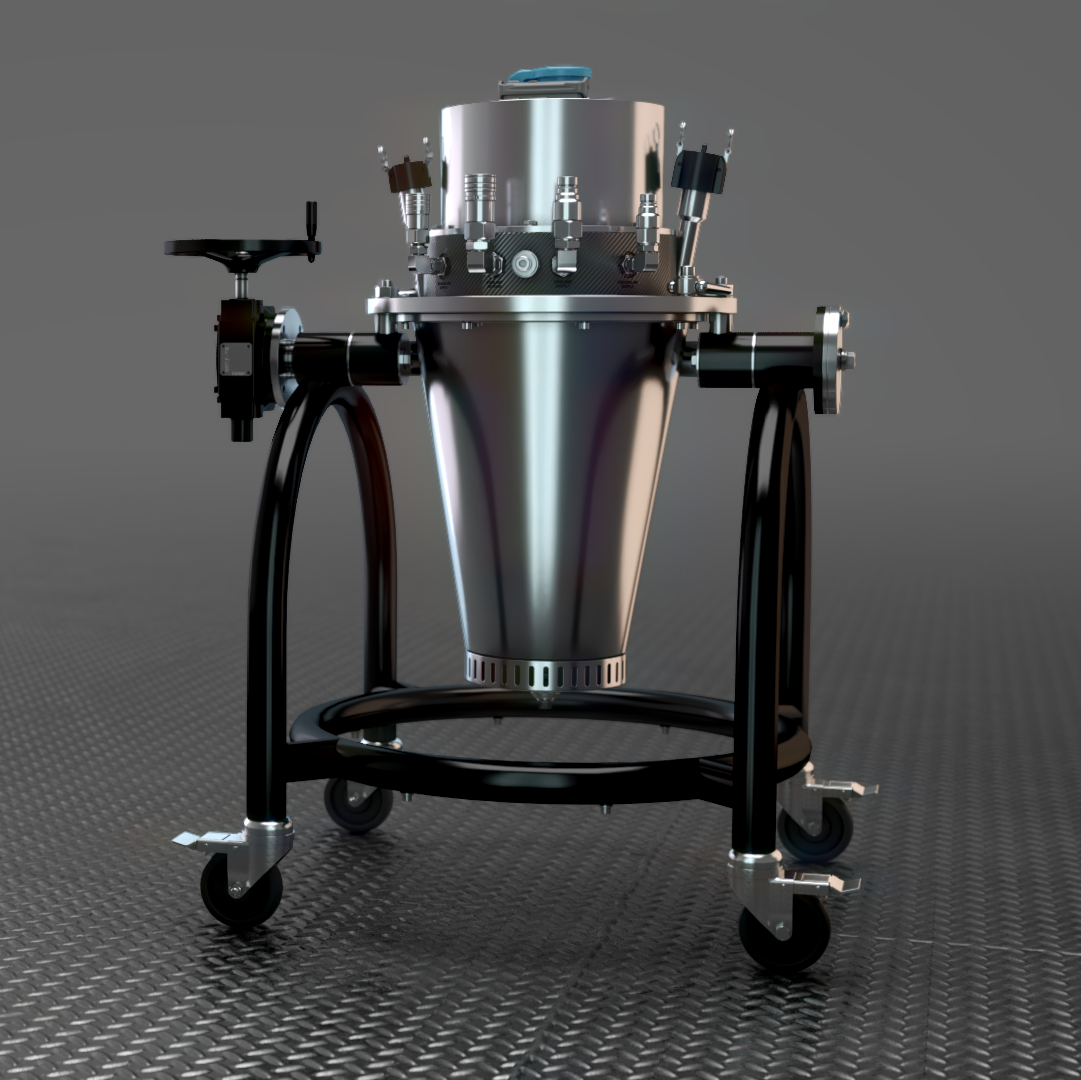
Dedert’s New Innovation: Air Bearing Atomizer (ABA) - An Oil Free Solution for Spray Drying

Dedert's air bearing atomizer offers significant advantages over traditional atomizer technologies, particularly in terms of illumination of product contamination sustainability, reliability, and ease of maintenance. Its unique design features an oil-free and contact-free operation, making it suitable for use in food-grade, pharmaceutical, chemical applications without the risk of product contamination.

The atomizer is also highly energy-efficient, with a permanent magnet motor that can achieve high power levels and disc-tip speeds, low carbon footprint, and reduced overall energy consumption.

17740 Hoffman Way, Homewood, Illinois 60430
+1 (708) 747-7000
Website and SEO done by S. M. Fahim of WP SEO Geeks

©2025 Dedert Corporation. All Rights Reserved.

chevron-down